Haskap (Honeyberry)
Lonicera caerulea
The earliest fruit of the season — tart-sweet berries on an ultra-hardy shrub. Plant two varieties.
- Zone 2–7
- 5 ft
- Full Sun
CA$27.99from
View PlantNova Scotia grownShipped across CanadaSeasonal bare-root shipping
Collection
Fast rewards, small spaces, big harvest energy.
Showing 2 of 4 plants
Zone 2 ✕My hardiness zone
Sunlight
Lonicera caerulea
The earliest fruit of the season — tart-sweet berries on an ultra-hardy shrub. Plant two varieties.
 Ships SpringIn Stock
Amelanchier alnifolia
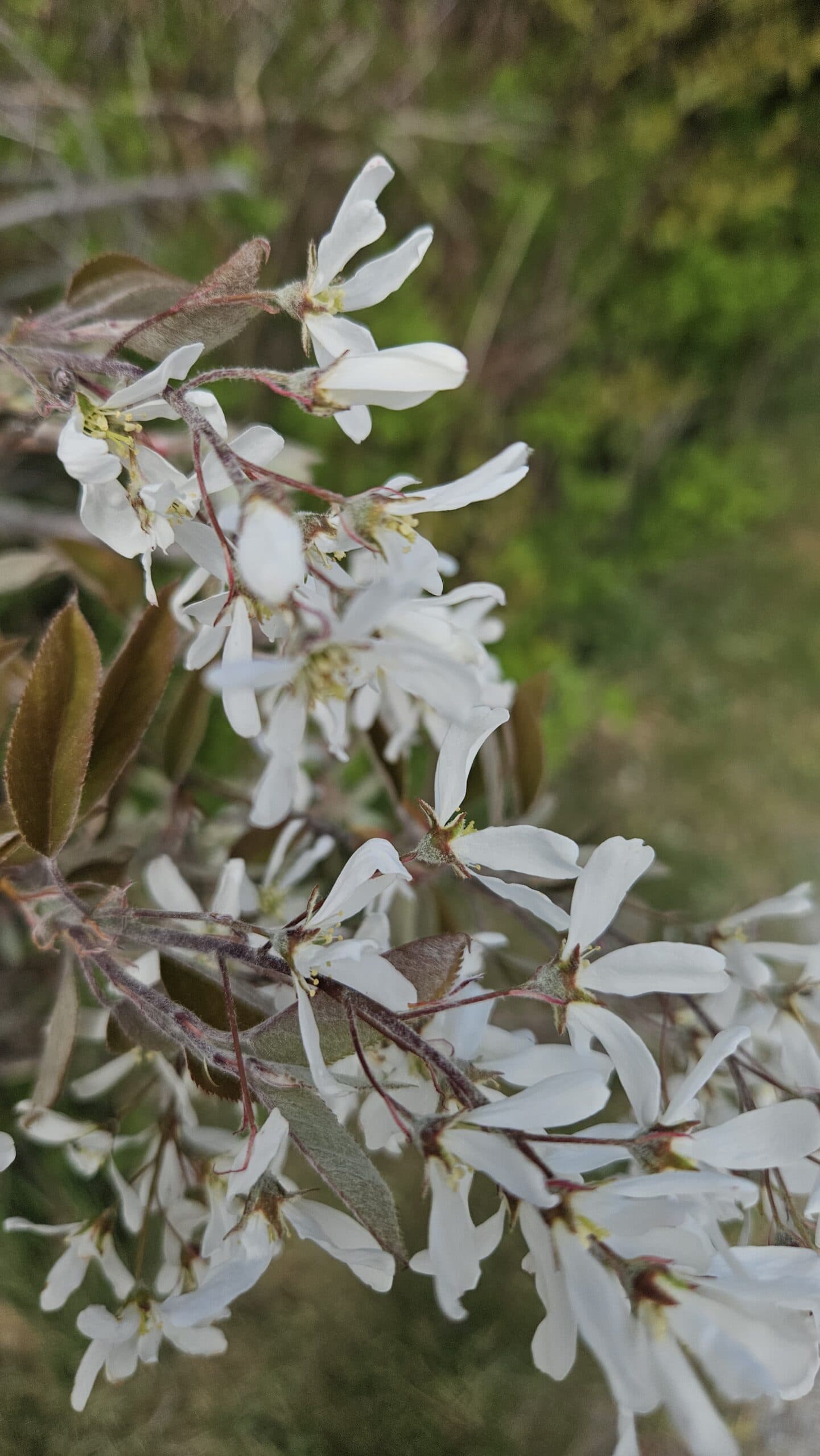
The Serviceberry: Canada's Four-Season Tree (Juneberry / Saskatoon) The Serviceberry ( Amelanchier spp. ), also affectionately known as Juneberry or Saskatoon Berry in the West, is arguably the most valuable multi-purpose native tree for the Canadian landscape. Whether you need a small, elegant shade tree, an edible fruit producer for your homestead, or simply a plant that delivers year-round aesthetic brilliance, the Serviceberry is the definitive choice. We offer species and cultivars renowned for their superior flavour and cold hardiness, ensuring success from Nova Scotia to the Prairies. A True Four-Season Ornamental Spring Spectacle: Serviceberry is one of the first trees to bloom in spring, often before the leaves emerge, covering the branches in a cloud of delicate, slightly fragrant white flowers. Summer Harvest: The flowers give way to clusters of small, sweet, purple-blue berries—similar in appearance to blueberries but often with a richer, nutty, almost almond-like flavour. Autumn Fire: The foliage transforms into brilliant shades of orange, red, and golden yellow, rivaling any non-native species for fall colour. Winter Elegance: Once bare, the smooth, ash-grey bark stands out against the snow, often exhibiting beautiful vertical reddish fissures for textural interest. Growing Your Own Saskatoon Superfruit Our Serviceberry trees are selected for their flavour and productivity. The ripe berries are a delight straight off the branch but are also perfect for jams, pies, cobblers, and preserves . Pro Tip: Saskatoon berries are a high-value crop commercially cultivated in Western Canada. To beat the birds (which love them!), consider netting your tree as the fruit begins to ripen in late June/early July, and pick the berries when they are dark purple-blue, not red. Specifications & Planting Success Specification Details Common Names Serviceberry, Juneberry, Saskatoon, Shadbush Scientific Name Amelanchier spp. (Often A. canadensis or the hardy fruiting A. alnifolia .) Canadian Hardiness Zone 2–9 (Varies by species; we focus on Zone 2/3 tolerant stock) Mature Size 4–8m (12–25 ft) tall, depending on if grown as a shrub or single-stem tree. Light Requirements Full Sun to Partial Shade (Full sun yields the best flower and berry production). Soil Tolerance Tolerates most soils, including clay and alkaline. Prefers moist, well-drained loam. Native Status Native to nearly all of Canada, making it an ecological powerhouse. FAQs Q: Are Serviceberry berries truly edible, and what do they taste like? A: Yes, they are completely edible and delicious! They are often described as tasting like a mix between a blueberry, a cherry, and an apple, with a distinct sweet, nutty finish. They are a favourite of many Indigenous communities and commercial fruit growers. Q: Does Serviceberry require a pollinator plant? A: Most Serviceberry species, including the popular A. alnifolia (Saskatoon), are generally self-fertile and can produce fruit from a single tree. Planting multiple specimens, however, can lead to a slightly larger crop. Q: How fast does Serviceberry grow? A: Serviceberry has a moderate growth rate, typically adding 30–60 cm (1–2 ft) per year. It quickly establishes its multi-season features, often blooming and fruiting within 2-3 years of planting.
Growing Guide
Berries are the impatient gardener's fruit: planted in spring, picking often begins the next summer. Haskap, elderberry, aronia, currants — bred and chosen for cold, and content in the corner of any yard.
Harvest next year
Most berry bushes bear within 1–2 seasons — the shortest wait in the nursery.
Fits anywhere
A single bush needs a metre and a half. A hedge of them feeds a family.
Absurdly hardy
Haskap laughs at −40°. Most of this category is comfortable in Zone 2–3.
Share with the birds
Elderberry, aronia, and serviceberry double as wildlife plantings — plant extra.
Haskap fruits before strawberries and takes Zone 2. Aronia is nearly indestructible and loaded with antioxidants. Elderberry gives flowers, fruit, and bird habitat in one plant. If you're starting a berry patch, start there.
Berries for Zone 3Plant bushes at 1–1.5 m spacing along a fence line and you get privacy, blossom, bird habitat, and buckets of fruit from the same footprint.
Hedge-worthy berry bushesHaskap needs an unrelated partner variety to fruit well, and several other berries crop heavier in pairs. Check the pollination note on each plant page and buy in twos where it says so.
Beginner-friendly berriesCurrants, gooseberries, and some raspberries often produce a token crop the season after planting; haskap and aronia usually hit stride in year two or three.
Full sun gives the biggest, sweetest crops, but currants and gooseberries genuinely tolerate part shade — they're the pick for east walls and dappled corners.
For fresh eating, two or three per person; for freezing and preserves, five-plus. Haskap and some others need at least two compatible varieties regardless — check each plant's pollination note.
Haskap and aronia are prairie-proven to Zone 2–3. Filter by your zone — everything shown will overwinter where you are.
Bare-root bushes ship in the spring and fall dormant windows; pot-ready stock ships through the growing season. Each plant page shows its shipping season.
Zone-matched plants
Every plant shows the zones where it thrives.
Grown in Nova Scotia
Raised for Canadian winters, shipped across Canada.
Not sure what fits?
Tell us your land and goals — we'll match you.