Nova Scotia grown

Collection

Nut Trees

2 plants

Plant long-term food, shade, and generational value.

Filters2

My hardiness zone

Zone 20Zone 31Zone 43Zone 53Zone 63Zone 73Zone 82

Pick your zone — we'll show only plants that thrive there.

Sunlight

Care level
Growth rate
Soil moisture
Mature height
Nature & wildlife
Harvest & readiness
Good to know
✕ Clear all filters (2)
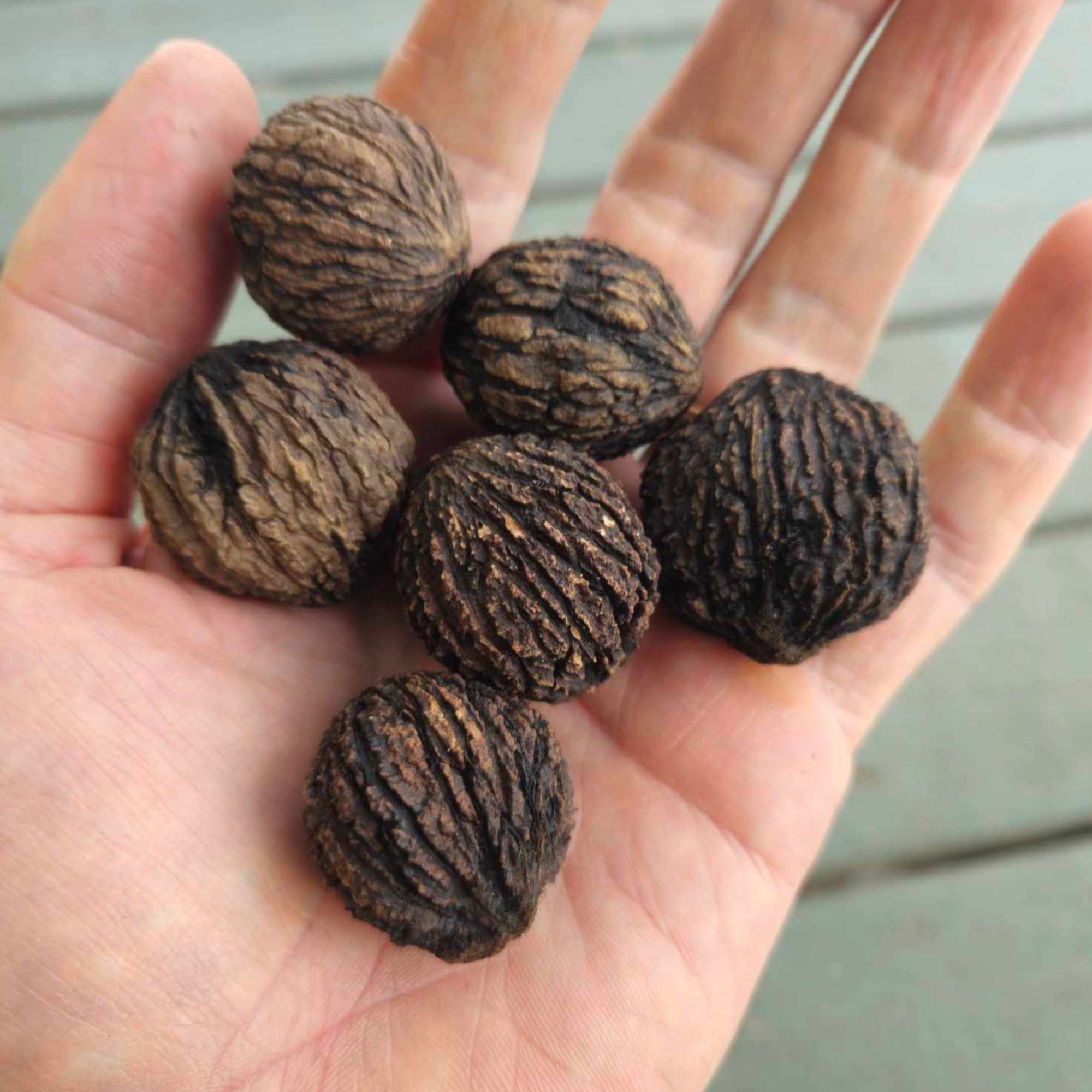
  • Black WalnutShips SpringIn Stock

    Black Walnut

    Juglans nigra

    If you're looking for the ultimate food forest tree , then the Black Walnut is an essential addition. It is the powerhouse of nut trees — tall, strong, and sturdy, yet with a surprisingly tropical appearance. The long leaves sway in the wind in a way that almost resembles palm trees. It can be used as: A backdrop for your garden or landscape A tree in an orchard-style setting A striking feature tree in the front or backyard And best of all — it produces delicious edible nuts . Nut Production Edible nuts are of course the main reason many growers choose the Black Walnut tree. The tree begins producing delicious nuts at around 8 years of age . Unlike the typical walnut found in supermarkets, the Black Walnut has a unique flavour profile — smoky, bold, rich, and hearty. Once cracked from the shell, the nuts can be enjoyed: Raw In baking In cakes and cookies Harvesting Nuts Black walnuts are one of the easiest nuts to harvest . Each autumn, the nuts fall naturally from the tree to the ground, making collection simple. Just gather the green, golf-ball-sized husks and place them in a bucket or bag. Depending on growing conditions, some nuts may grow even larger. If you have multiple productive trees, selling the nuts can also become a small source of income . Timber Value Black Walnut is also highly valued for timber production . The wood is extremely sought after by furniture makers due to its: Strength Durability Beautiful dark colour Large mature Black Walnut trees have been known to sell for tens of thousands of dollars . On average: 40- 60 year-old trees grown for timber and veneer can be valued at between $1,000 - $5000 each With approximately 25 trees per acre , timber value could reach $30,000 - $125,000 per acre Allowing trees to mature for 50 years or more can significantly increase this value. Pollination For best nut production, it is recommended to plant at least two Black Walnut trees . Planting multiple trees improves pollination and helps ensure a healthy nut harvest. Mature Tree Size Black Walnut trees can grow to a mature height of approximately 80 feet . With good growing conditions and plenty of sunlight, they grow quickly and can reach 50 feet in height within a few decades . Sun or Shade? Black Walnut is naturally a forest tree . It can tolerate partial shade, but full sun will produce the best nut yields . Planting Instructions Your Black Walnut trees are shipped as bare-root seedlings approximately 1–3 feet tall . Roots are carefully wrapped and kept moist during shipping. When planting: Dig a hole about 1.5 times the size of the root system Add compost or rich soil if available Plant within 3 days of receiving the tree Spacing Black Walnut trees can be planted as close as 10 feet apart , but for orchards and timber production, spacing of around 20 feet apart is recommended. Ordering Instructions Select the quantity of Black Walnut tree seedlings Click Add to Cart Complete checkout using card, PayPal, or e-transfer Our bare-root tree sale is currently active , and quantities are limited each year. Don’t miss out — complete your Black Walnut tree order today . Sizes A Grade (Ground-Ready): Stronger, thicker stems for instant planting. B Grade (Ground-Ready): Thinner stems, but still suitable for planting directly in the ground.

    • Zone 4–9
    • 75 ft
    • Full Sun
    CA$13.00from
    View Plant
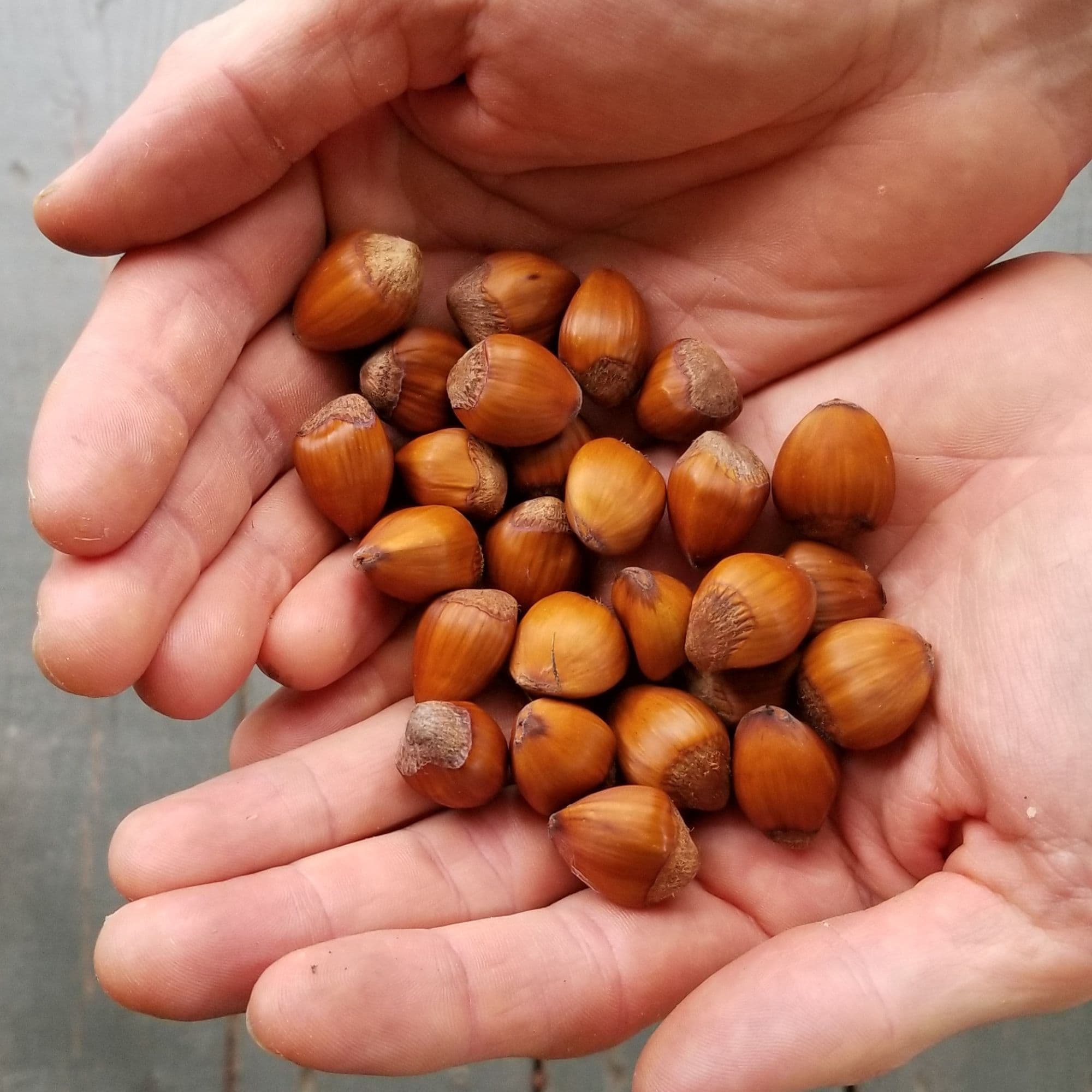
  • Hazelnut TreeShips SpringIn Stock

    Hazelnut Tree

    Corylus americana

    No Hazelnuts shipped to BC. 5 Great Reasons to Plant a Hazelnut Tree Easy-to-crack shell. Easy to pick from the tree. Produces nuts in 3–5 years . Fast-growing tree. Versatile! Plant as a hedge, on its own, or in an orchard. Choose between 4 different hazelnut tree seedlings : Geneva – Biggest nut Het 3 – A sweet nut Northern – Most cold-hardy nut Slate – All-rounder Did You Know the Hazelnut Tree Needs a Partner Tree? Yes, that’s right. The hazelnut tree needs a pollinator tree to produce nuts. Pick at least two different varieties when selecting your hazelnut tree seedlings. Our hazelnut trees are shrub-like trees , growing to a height of about 15–25 feet . The hazelnut tree has a round, spreading crown and produces small, fragrant flowers in the spring . These flowers develop into groups of 1–4 green husks with nuts inside . They mature into the delicious brown hazelnuts we are all familiar with and enjoy eating. Easy-to-Crack Nuts All nuts need to be cracked, and hazelnuts are among the easiest . The shell is thin and the kernels are large . Once you collect your hazelnuts from the tree, simply use a regular kitchen nutcracker to enjoy their flavour. Easy Harvesting Because the hazelnut tree is smaller than most nut trees , it’s easy to harvest. The nuts usually grow within arm’s reach , and the higher branches are flexible enough to pull down to your level or to your picking partner’s baskets. Pick them when the nut twists easily inside the husk . One of the Fastest Nut Trees to Produce Among nut trees, the hazelnut is one of the quickest to produce . Our trees are grown in high-quality composted soil mix and typically reach 2–3 feet in their first year . Some growers have seen nuts within the first 3 years , though most will begin producing in 3–5 years — much faster than other nut trees that may take 8+ years . Fast-Growing and Easy to Maintain Hazelnut trees grow quickly once planted in their permanent location. Adding compost and mulch each year will help encourage new shoots and keep the plant healthy. Planting Your Hazelnut Tree We ship our trees bare-root . The roots are wrapped and kept moist during shipping. Plant your trees within 3 days of receiving them . Hazelnuts are great for: Privacy hedges Garden borders Shelter for other plants Orchard plantings If planting an orchard, space trees about 20 feet apart for best growth and productivity. Choosing Your Hazelnut Tree Choose from four varieties of hazelnut seedlings : Geneva – Biggest nut Het 3 – Sweet nut Northern – Most cold-hardy Slate – All-rounder with medium-sized, tasty nuts For proper pollination and nut production, plant at least two different varieties . Tree Size Options A Grade (Ground-Ready): Stronger, thicker stems for instant planting. B Grade (Ground-Ready): Smaller than A grade but still suitable for planting directly in the ground. Pot-Ready: Start in a pot or nursery bed for one season before transplanting. Hazelnut Varieties (Seedling-Grown) Geneva Hazelnut – Bare Root High-performing hybrid tree Prolific nut producer Large, slightly oval nuts Harvest in mid to late September Often used as a pollinizer Grows well in Zones 5–8 Female flowers are hardy in Zones 6–8 Het 3 Hazelnut – Bare Root Smaller tree with high yield efficiency Sweet-tasting nuts Higher kernel percentage with medium-sized nuts Earlier nut maturity Well suited to small orchards or backyard gardens Recommended for Zones 6–8 Northern Hazelnut – Bare Root Thrives in cold climates Hybrid including Asian hardy hazelnut genetics Smaller than standard European varieties Typically reaches 10–14 feet tall (3–4 m) Hardy to Zone 3b , and may survive in Zone 3a Slate Hazelnut – Bare Root Cold-hardy selection bred for northern climates Reliable production with strong disease resistance Medium-sized nuts with good flavour Dense, rounded shrub 8–12 feet tall (2.5–3.5 m) Excellent for hedges, food forests, and mixed plantings Hardy in Zone 5 , may survive in Zone 4 with protection Ordering Your Hazelnut Trees From the drop-down menu, select your preferred hazelnut tree seedlings . Add the quantity of trees to your cart and proceed to checkout. You can pay easily using a credit card, PayPal, or e-transfer . Our bare-root plant sale is on now , but supplies are limited each year. Don’t miss out — choose your hazelnut trees today! Important Note About Seedling Trees These hazelnuts are seedling-grown here at our nursery , not cloned or grafted cultivars. Each plant is genetically unique , meaning growth habits, nut size, flavour, and productivity may vary. Seedling hazelnuts are hardy, resilient, and excellent for hedgerows, wildlife plantings, and food forests .

    • Zone 4–8
    • 15 ft
    • Full Sun
    CA$9.00from
    View Plant

Growing Guide

Why grow nut trees?

A nut tree is the slowest, surest investment a landscape can hold: a decade of patience buys fifty years of protein, shade, timber value, and wildlife food. Our nut trees are grown in Nova Scotia for real Canadian winters — black walnut, butternut, hazelnut, heartnut, and more.

  • Food that keeps

    Nuts store for months without processing — the most practical protein a home landscape can produce.

  • Cold-hardy genetics

    Our selections fruit reliably in short seasons — many are comfortable to Zone 4, several to Zone 3.

  • Legacy value

    Walnut and other hardwoods appreciate for decades — shade for you, timber value for the next generation.

  • Wildlife anchors

    Mature nut trees feed birds and mammals through winter and anchor a food-forest canopy.

Match the tree to your zone first

Hazelnut and black walnut handle Zone 4 with ease; butternut and some hickories push colder. Start from your hardiness zone and choose from what thrives there — not the other way around.

Nut trees for Zone 4

Plan for pollination — most nut trees want a partner

Hazelnuts and most walnuts set far better crops with a second tree nearby. Plant in pairs (or check the pollination notes on each plant page) and give big species 10–15 m of spacing; hazelnuts are happy at 3–5 m.

See self-fertile options

Starting out? Start with hazelnut

Hazelnuts stay shrub-sized, bear in 3–5 years instead of 10, tolerate pruning, and double as a hedge — the friendliest first nut by a wide margin.

Beginner-friendly nut trees

Nut Trees questions, answered

How long until a nut tree produces?

Hazelnuts typically begin bearing in 3–5 years. Black walnut, butternut, and heartnut usually take 7–12 years to meaningful crops — plant them for the decades, and plant hazelnuts for the meantime.

Do I need two nut trees for pollination?

Usually yes. Hazelnuts require a genetically different partner nearby, and walnuts crop far better with company. Each plant page lists its pollination requirement and good partners.

Which nut trees survive Zone 3?

Butternut and some hazelnut selections handle Zone 3 sites, especially with shelter from wind. Check the zone badge on each plant — we list the honest range, not the optimistic one.

Can I plant a walnut near my garden?

Give it distance. Walnuts release juglone, which suppresses tomatoes, apples, and some other plants. Keep vegetable beds and sensitive species 15–25 m from the mature dripline — plant pages list companions that tolerate it.

How far apart should nut trees go?

Full-canopy species (walnut, hickory) want 10–15 m between trunks. Hazelnuts are content at 3–5 m, closer if you're growing them as a hedge.

  • Zone-matched plants

    Every plant shows the zones where it thrives.

  • Grown in Nova Scotia

    Raised for Canadian winters, shipped across Canada.

  • Not sure what fits?

    Tell us your land and goals — we'll match you.

Need help choosing?Talk to a Plant Expert